Fungal
moderate
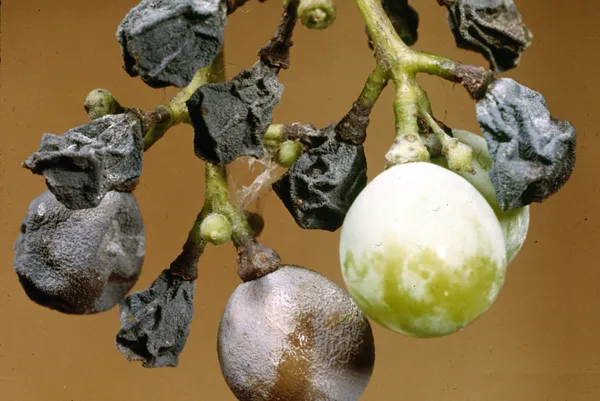
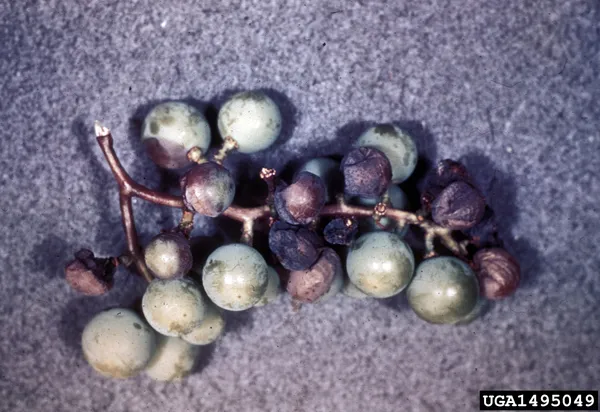
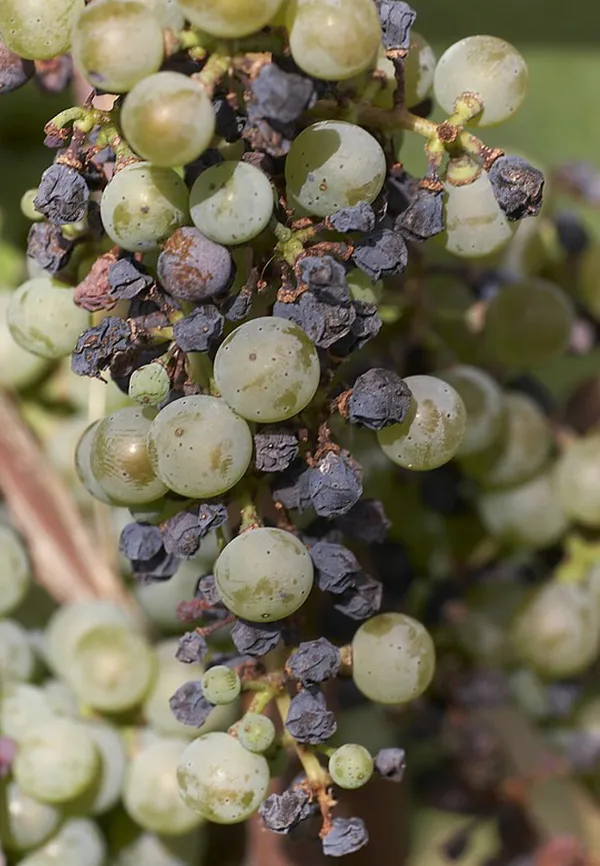
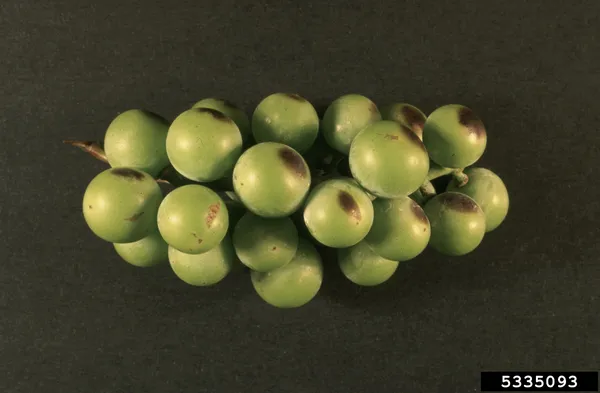
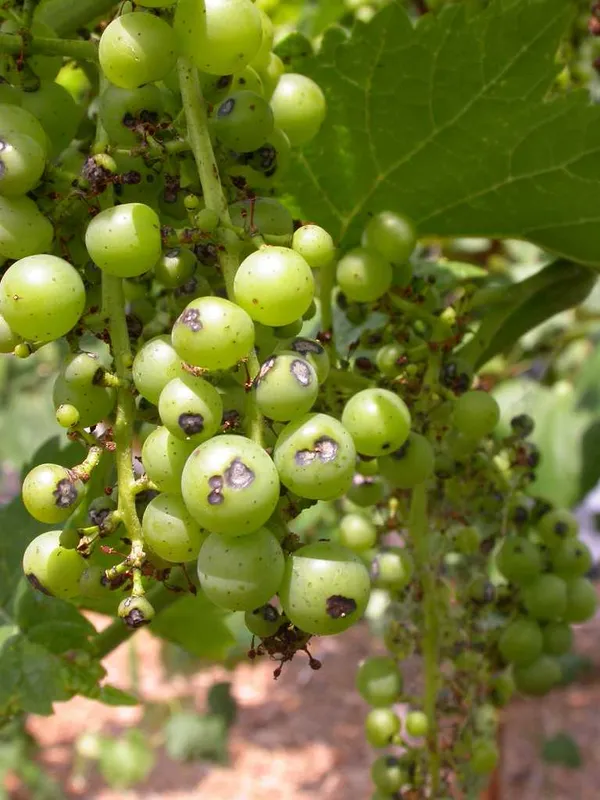
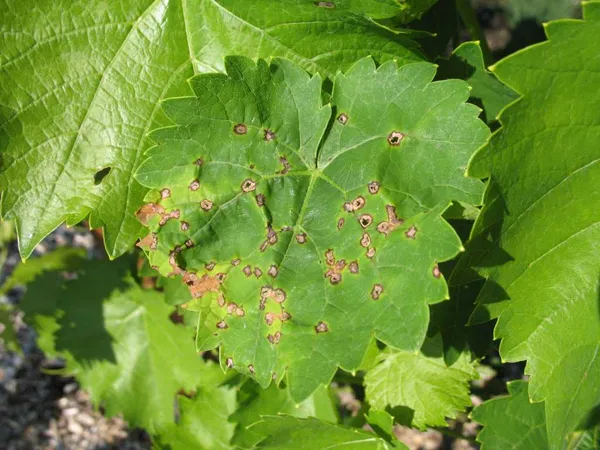
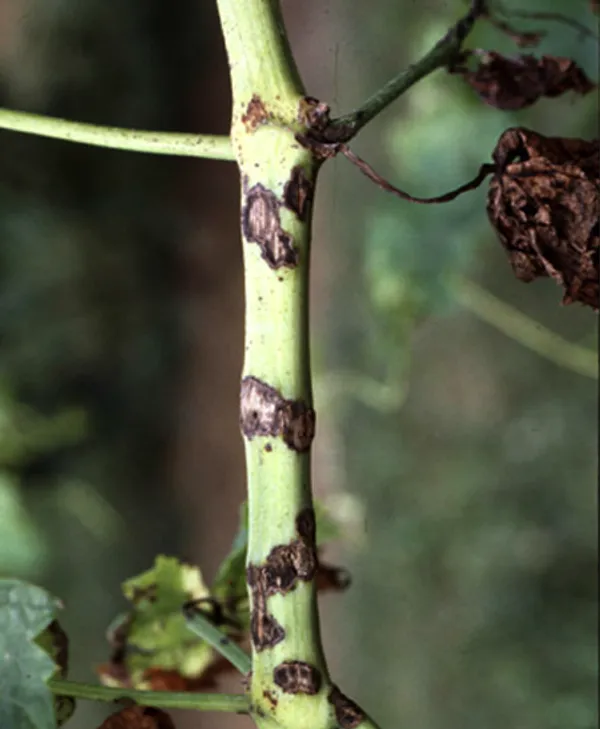
Anthracnose
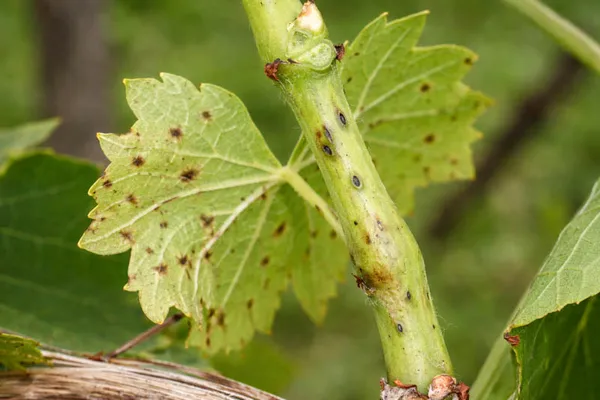
Sunken spots with dark margins on shoots and berries — the classic "bird's-eye rot".
25 problems can affect the leaves of your grapevine. Filter by type, or open one to compare symptoms and treatments.
Sunken spots with dark margins on shoots and berries — the classic "bird's-eye rot".
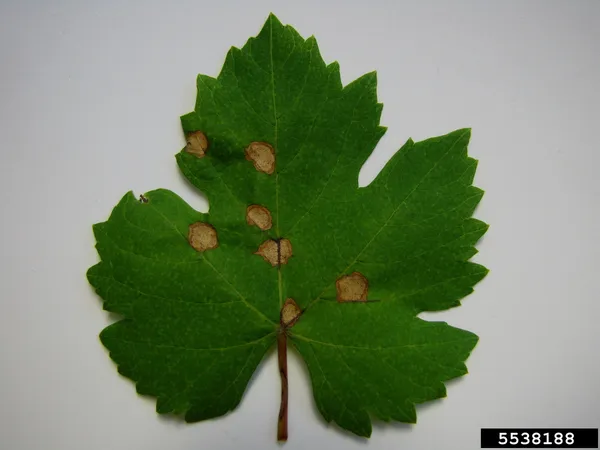
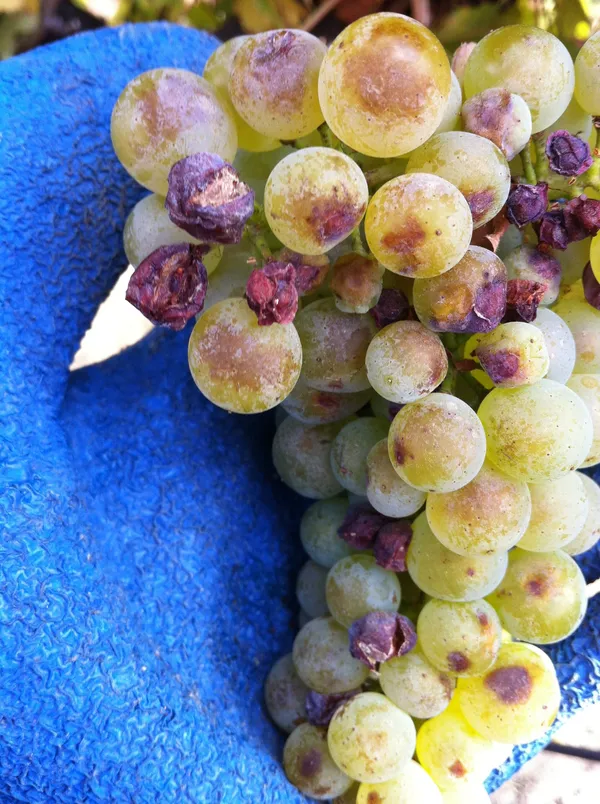
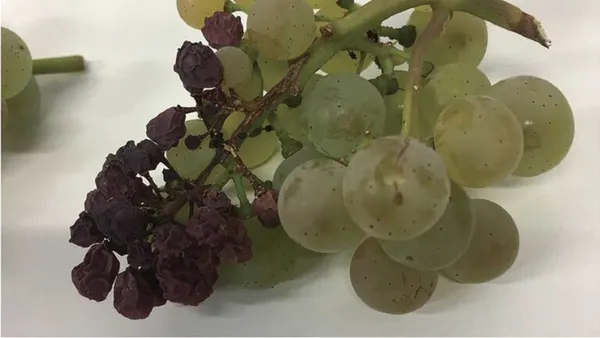
Tan leaf spots ringed with black dots, and berries that shrivel into hard black mummies.
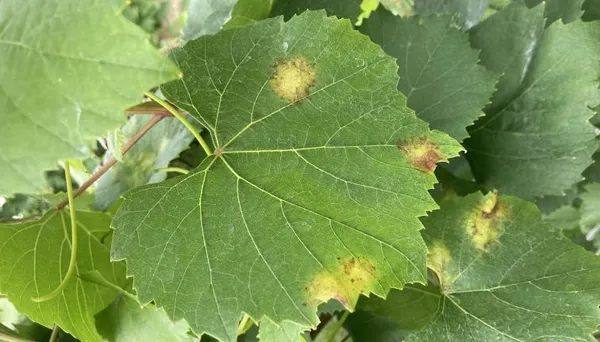
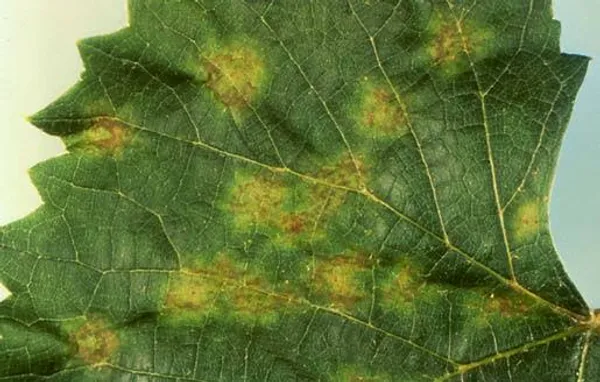
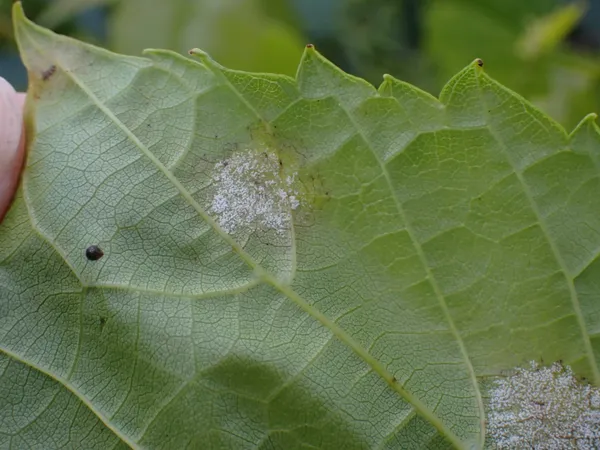
Yellow "oil spots" on top of the leaf with white fuzz underneath — loves wet, warm weather.
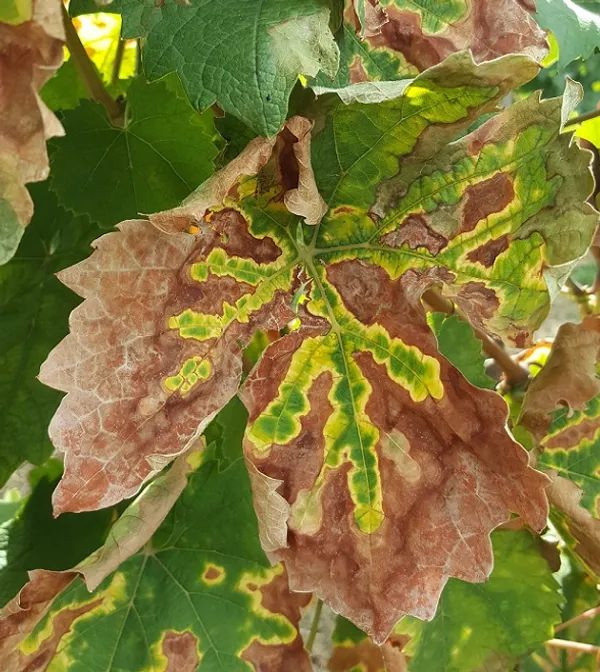
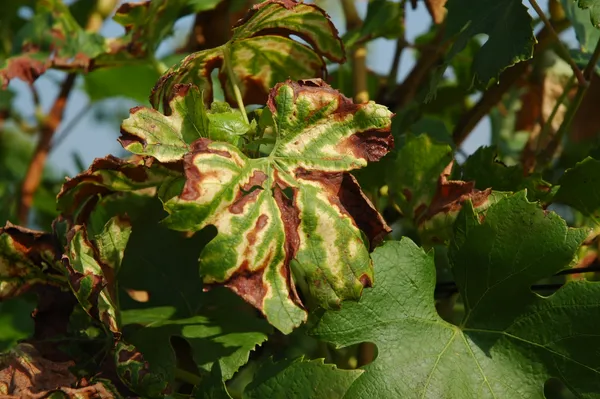
A chronic wood rot of older vines, showing as "tiger-stripe" leaves and sudden collapse.
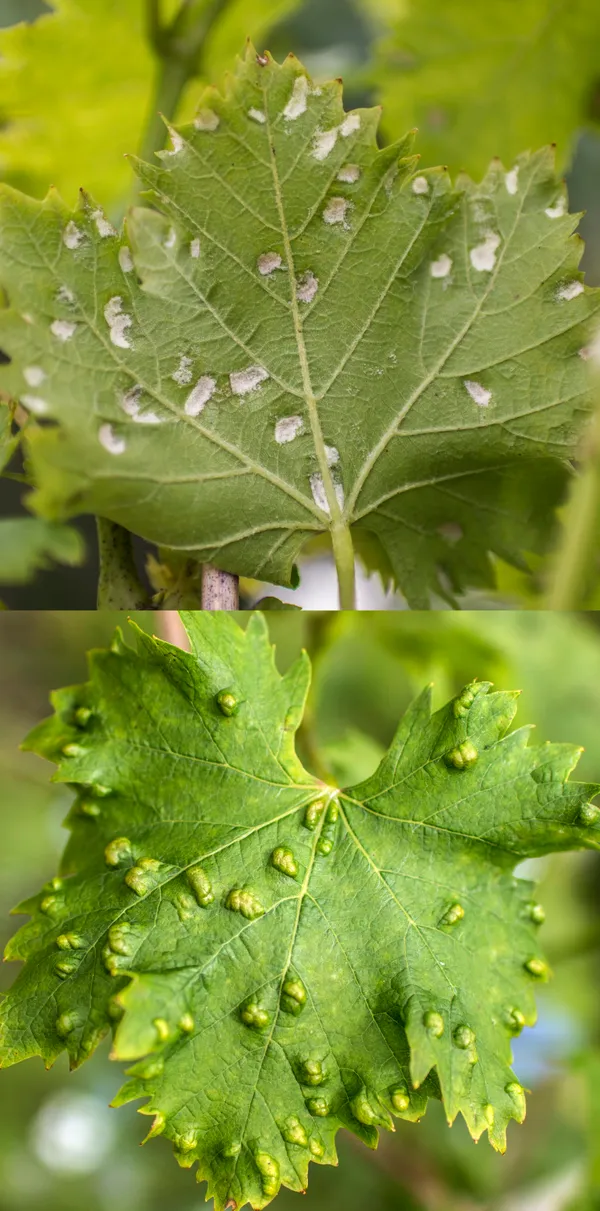
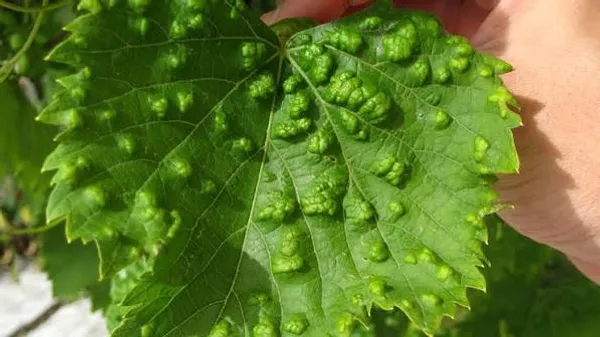
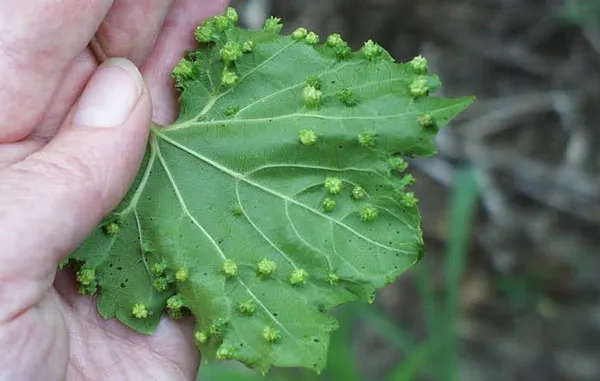
A microscopic blister mite that raises fuzzy welts on leaves — alarming but rarely harmful.
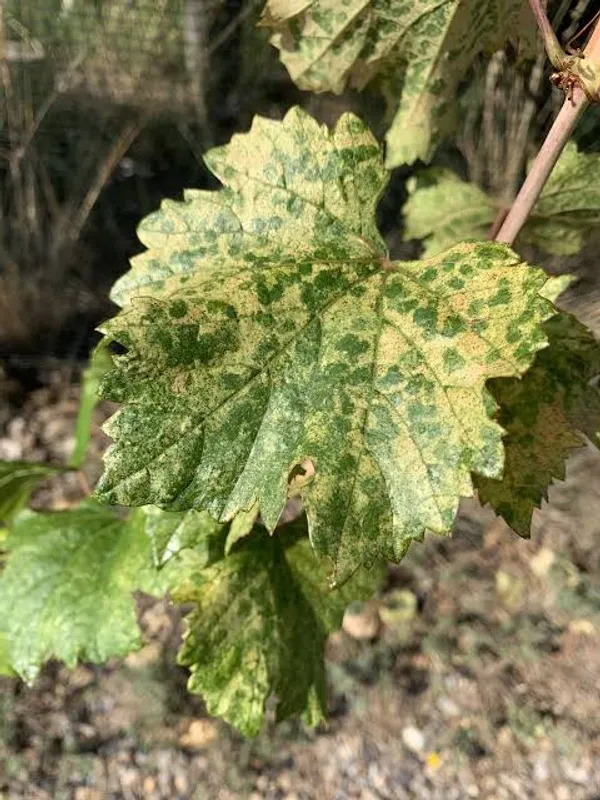
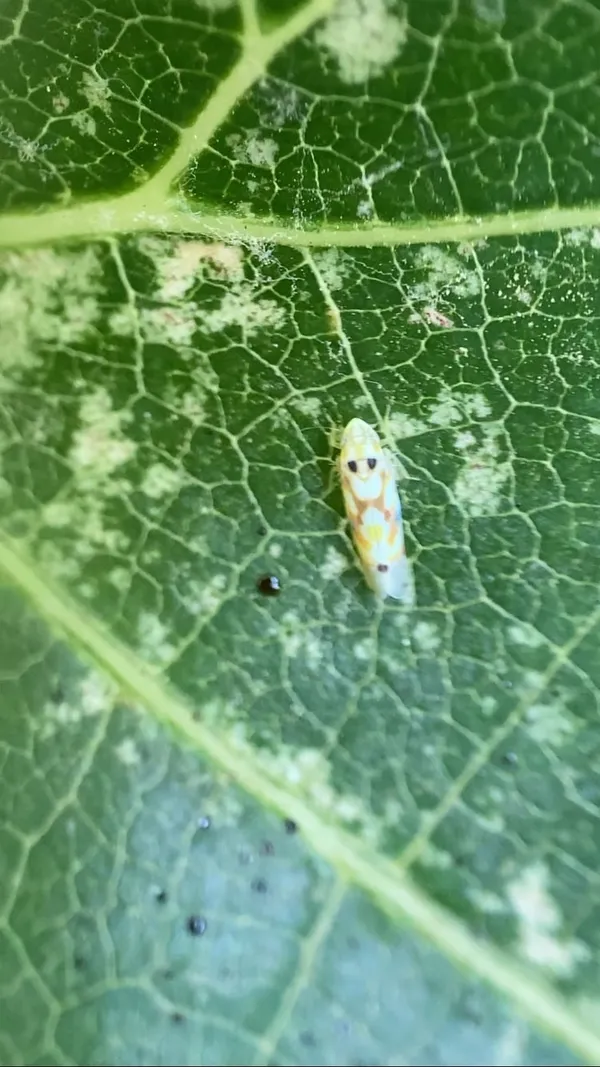
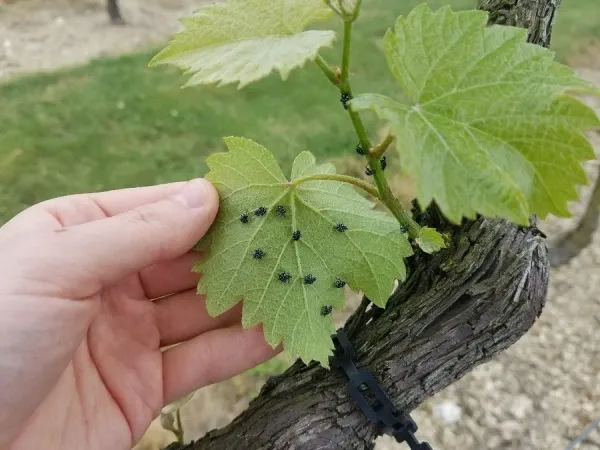
Small hoppers whose feeding stipples leaves white; heavy numbers scorch the canopy.
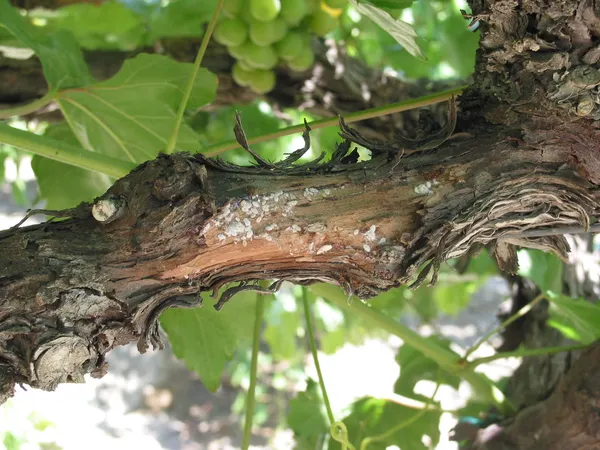
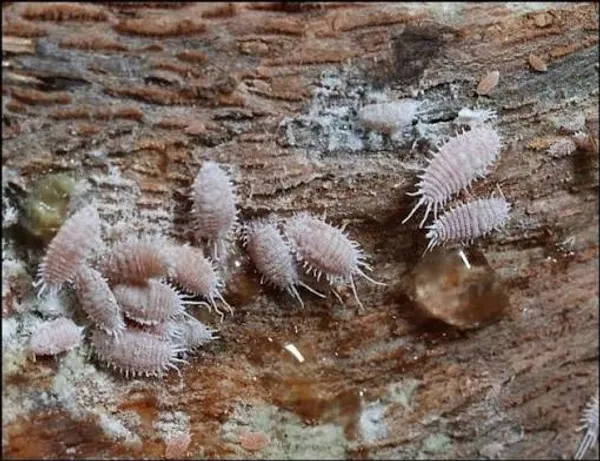
Soft, waxy sap-suckers that foul clusters with honeydew — and spread leafroll virus.
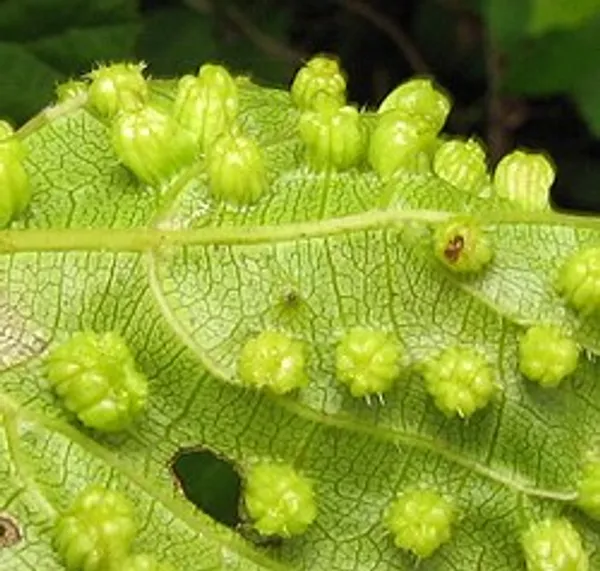
A tiny root-feeding aphid-like insect that devastates own-rooted European grapes.
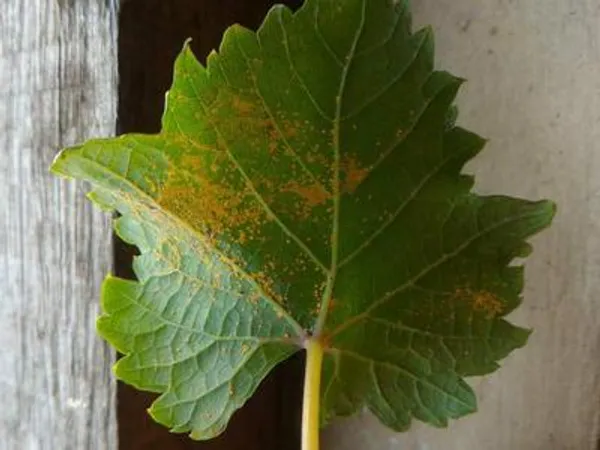
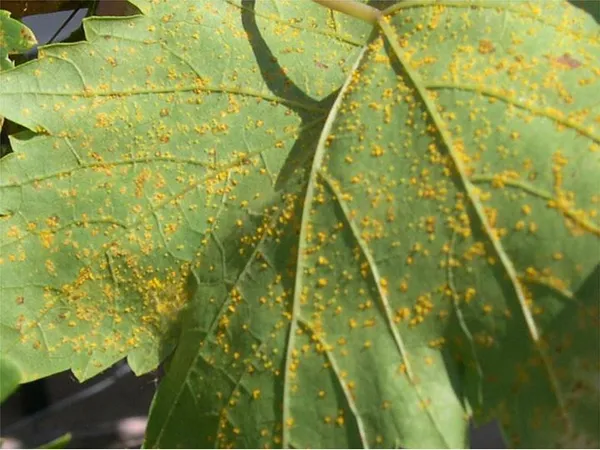
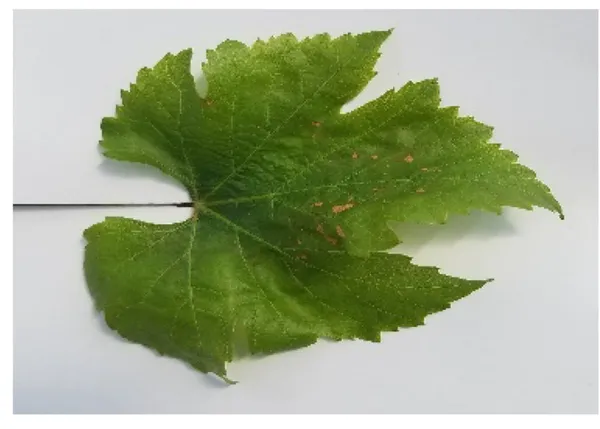
Bright orange pustules that dust the underside of leaves, causing early leaf drop in warm regions.
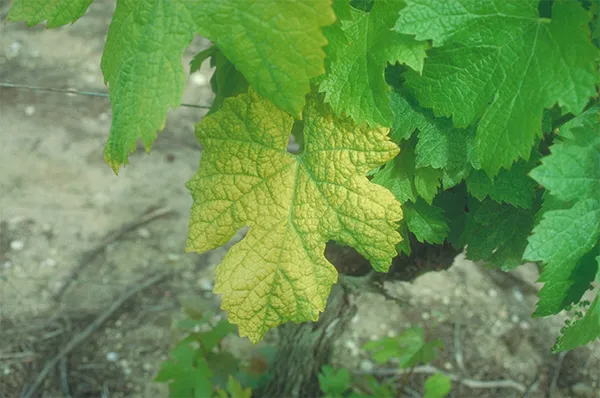
A nematode-spread virus that deforms leaves into a fan shape and leaves the crop straggly.
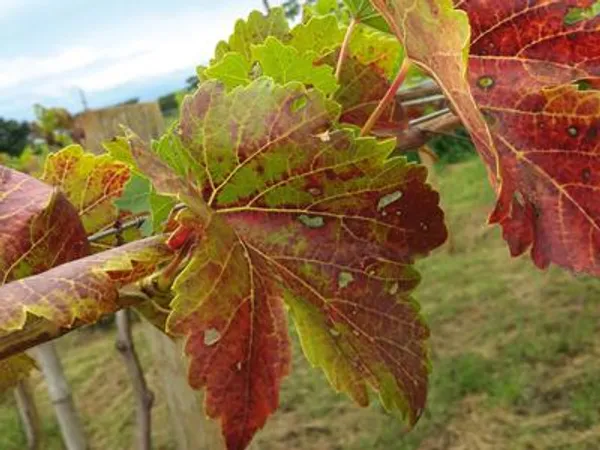
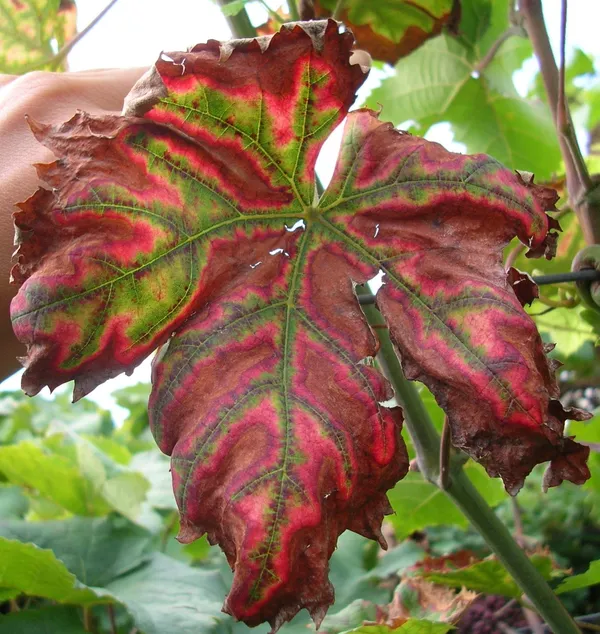
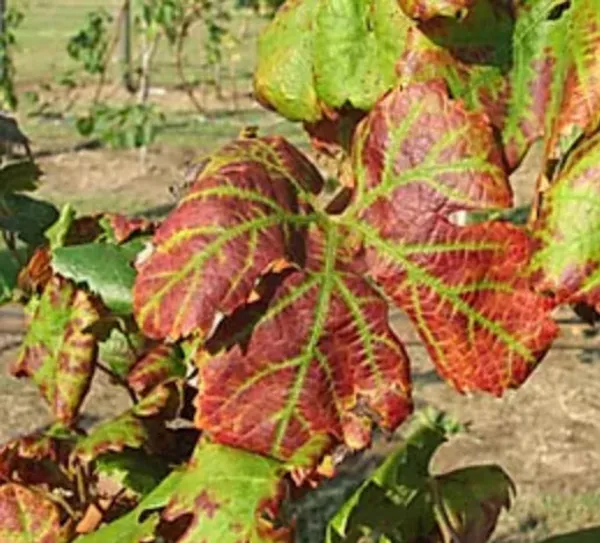
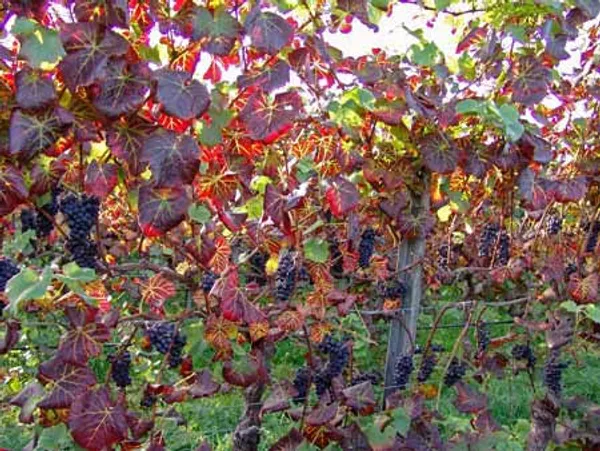
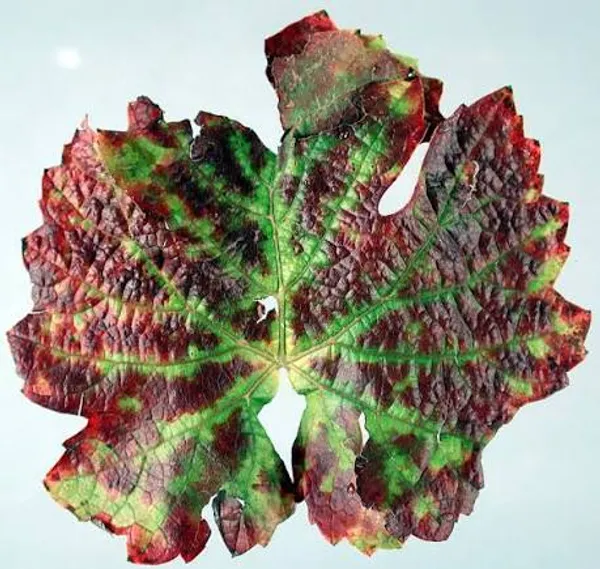
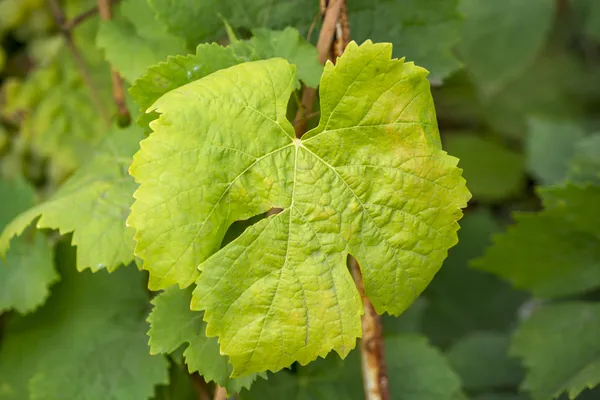
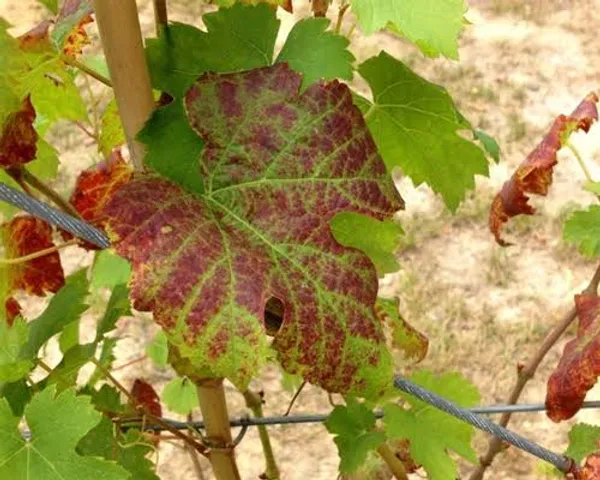
Autumn leaves that roll downward and turn deep red or yellow while the veins stay green.
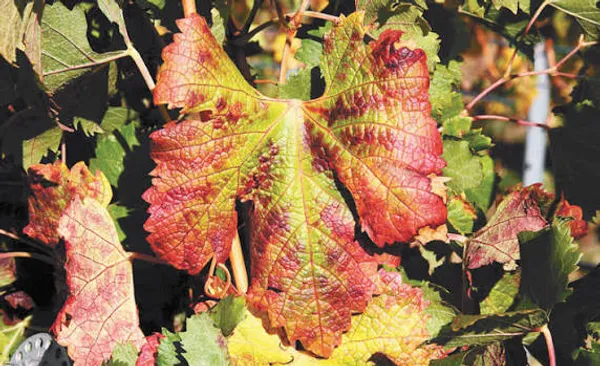
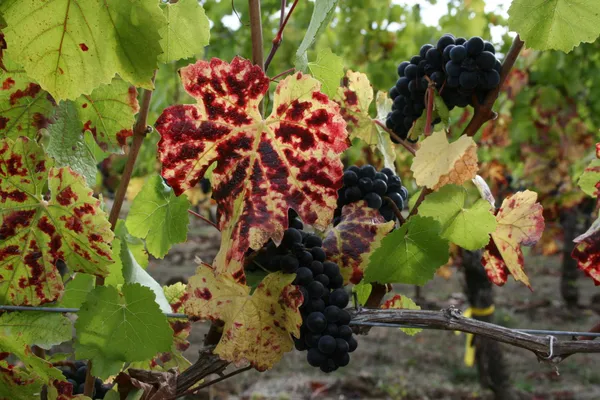
Red blotches on leaves that mimic leafroll but mainly delay ripening and lower sugar.
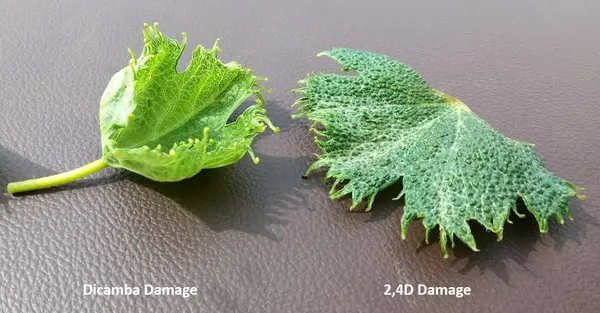
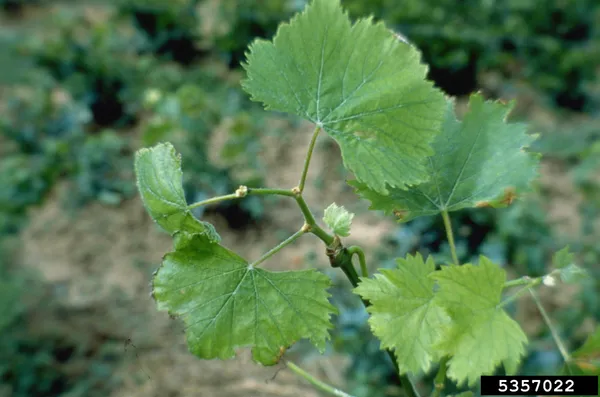
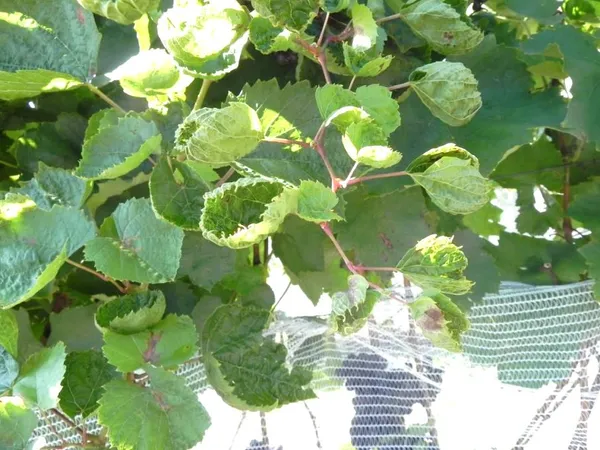
Distorted, cupped, fan-shaped new growth from weed-killer that drifted onto the vine — not a disease at all.
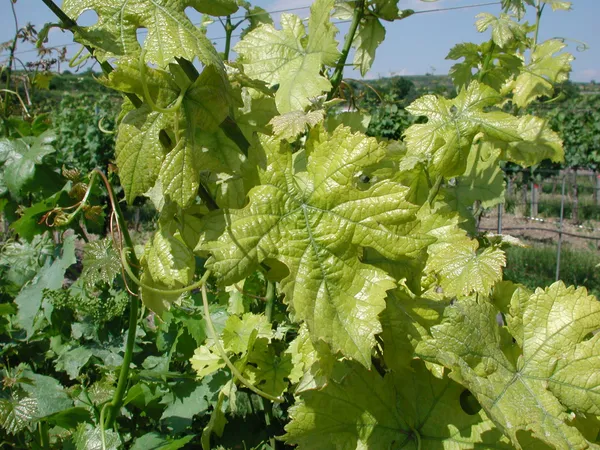
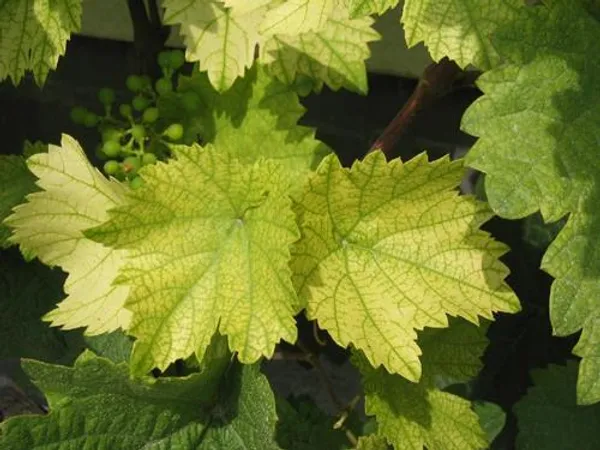
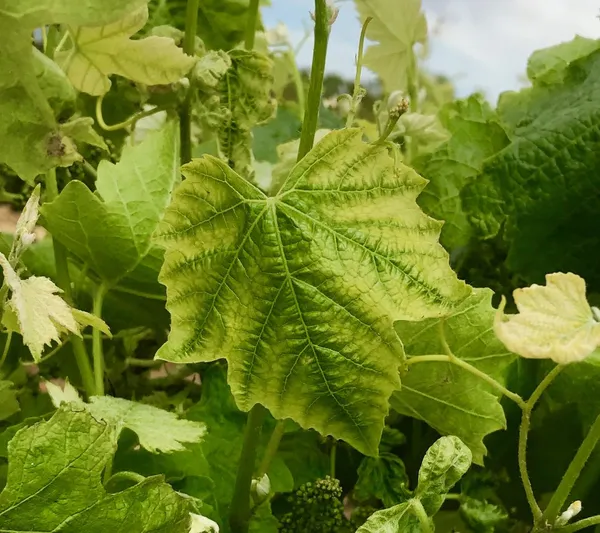
Yellowing of the youngest tip leaves with green veins — usually a high-pH soil problem, not a lack of iron.
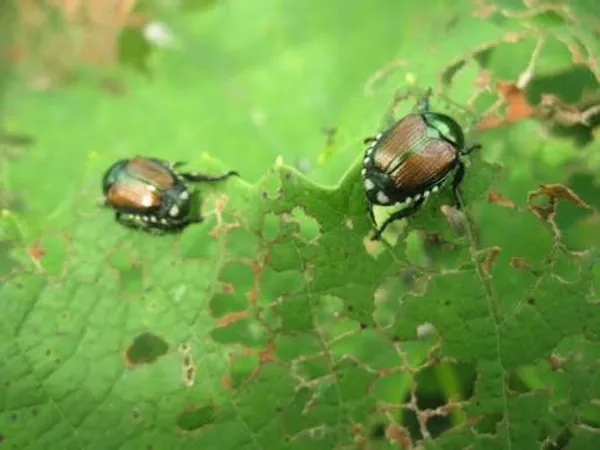
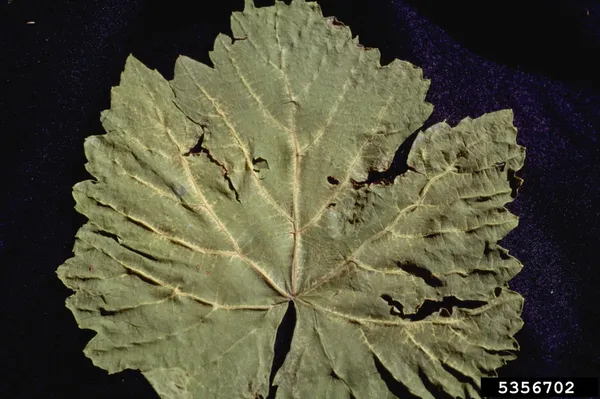
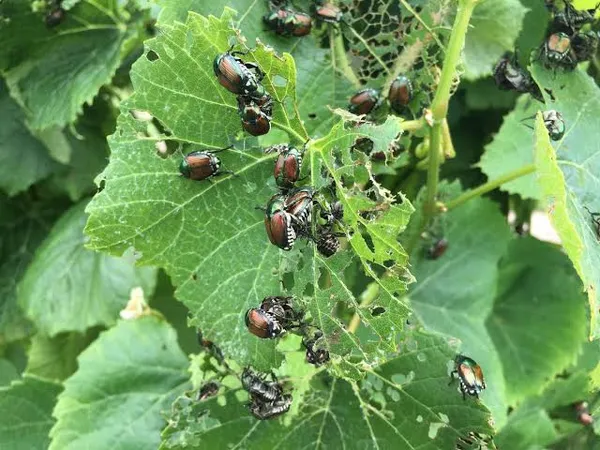
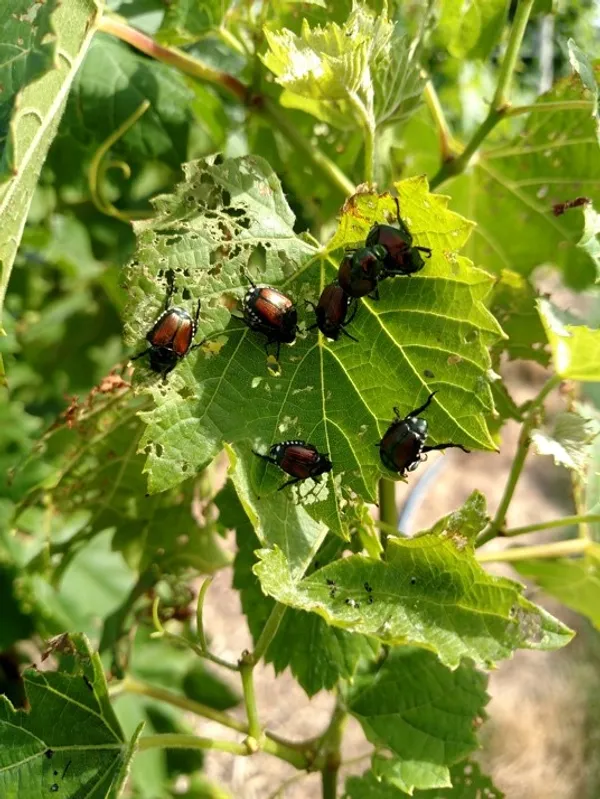
Metallic beetles that skeletonise leaves, chewing the tissue between the veins into lace.
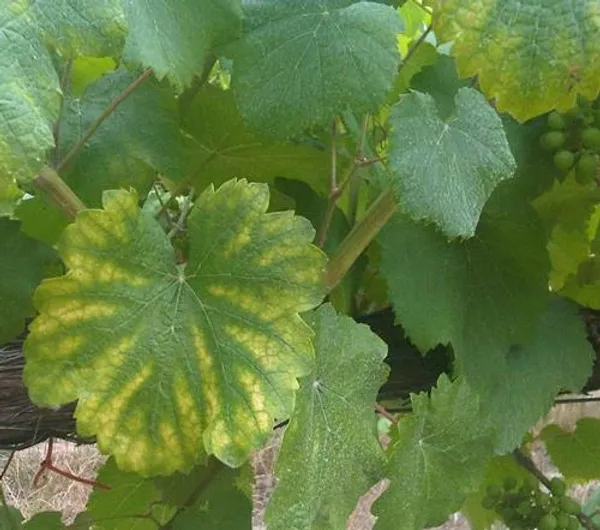
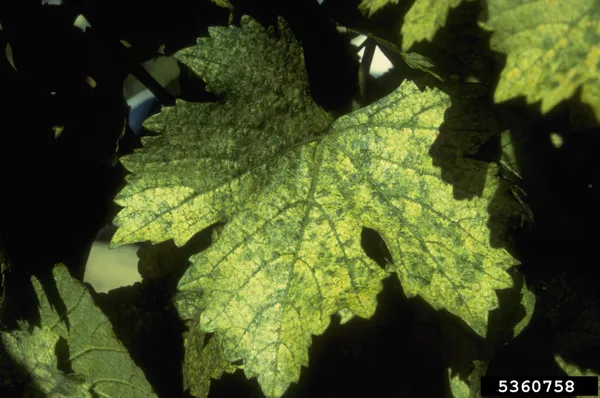
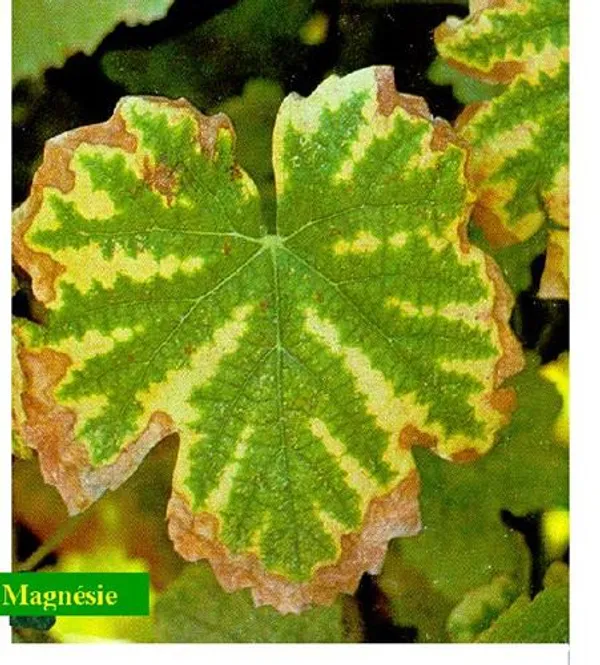
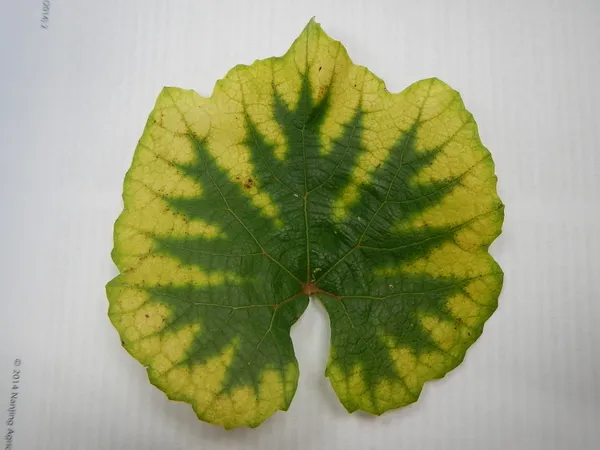
Yellowing between the veins of older leaves while the veins stay green — one of the commonest grape disorders.
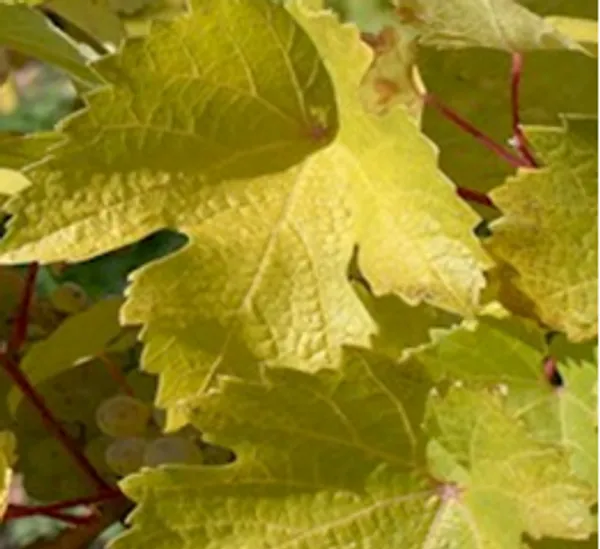
Uniformly pale, small leaves and weak growth from too little nitrogen — the vine simply lacks vigour.
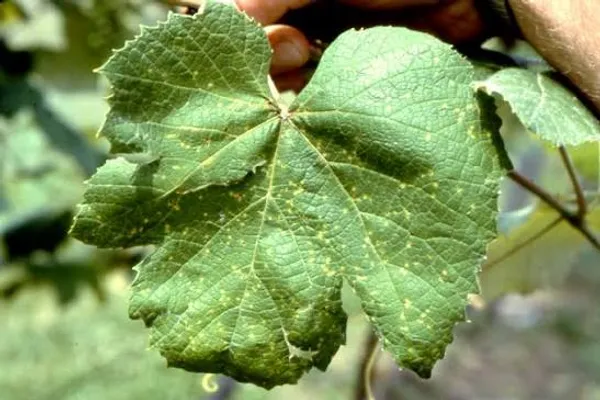
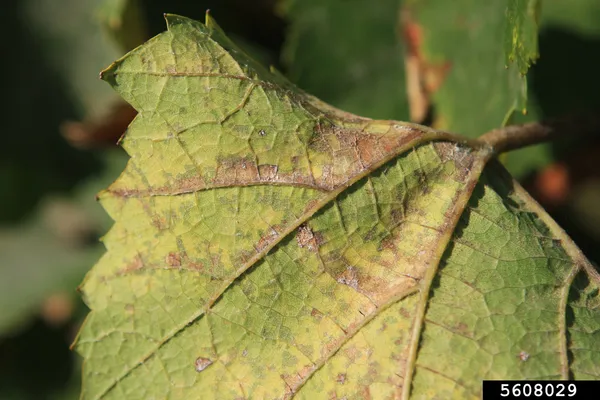
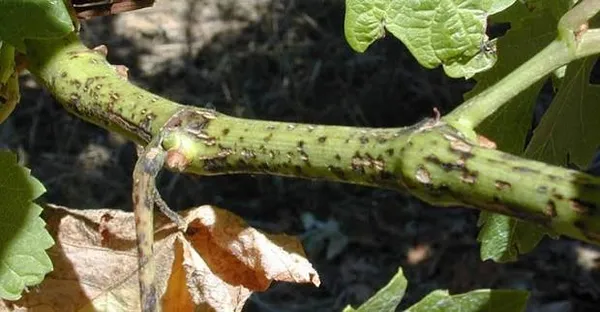
Black specks and cracked bark on the base of shoots, plus small spots on lower leaves.
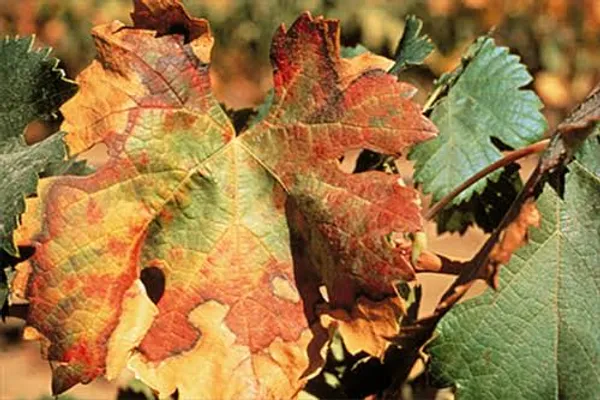
A bacterium spread by sharpshooter insects that clogs the vine's plumbing and kills it over 1–3 years.
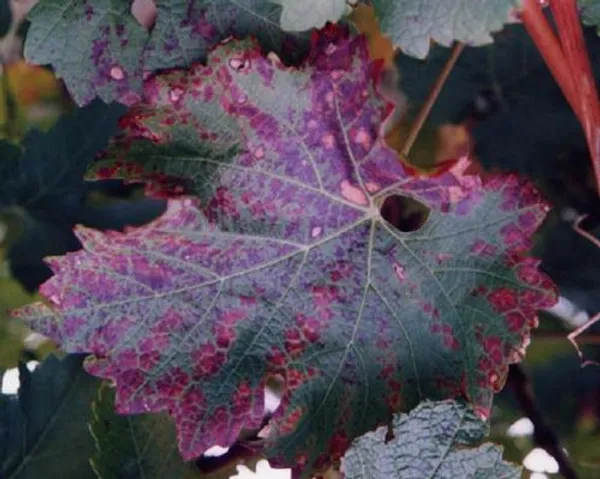
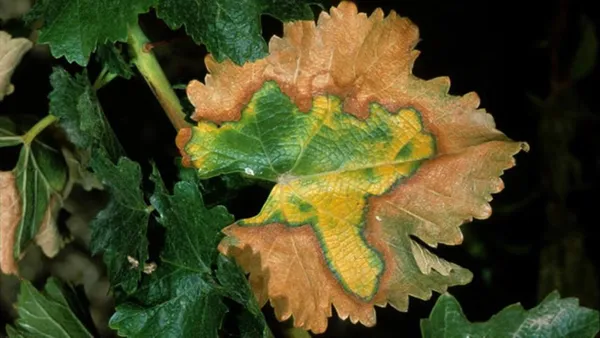
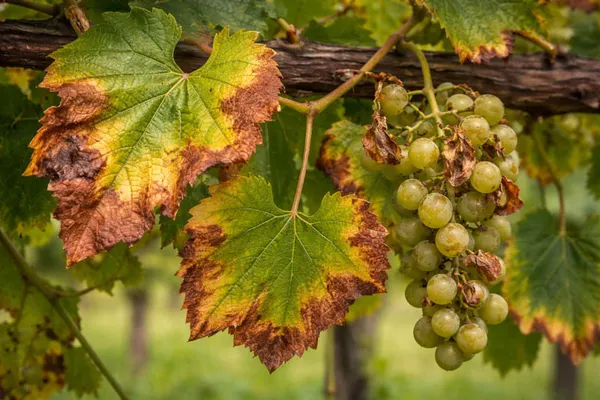
Scorched, curling leaf margins on older leaves and poorly ripening fruit — a heavy-cropping vine's shortfall.
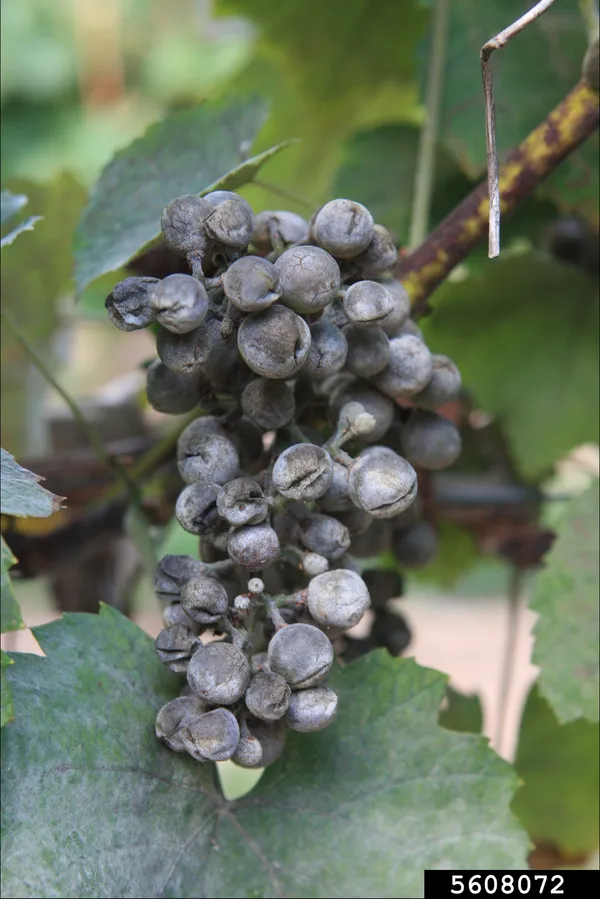
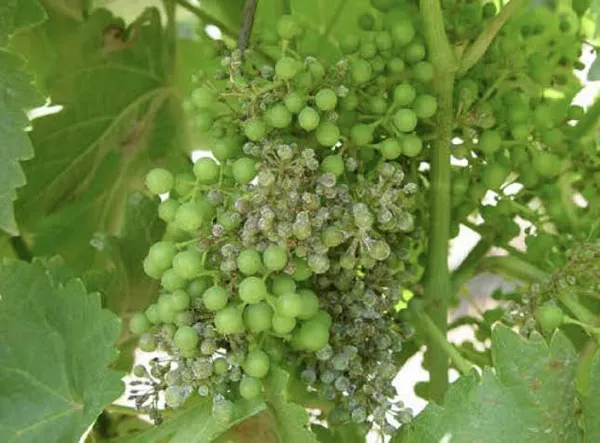
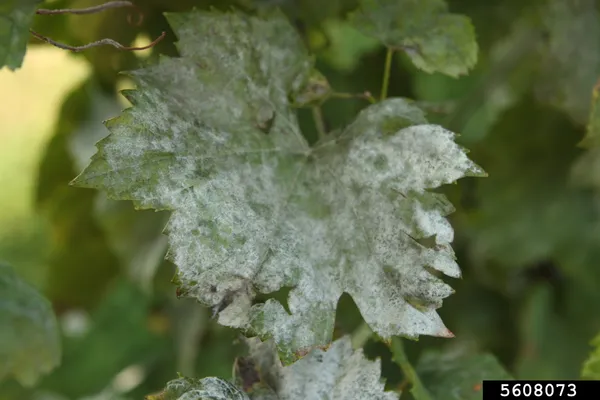
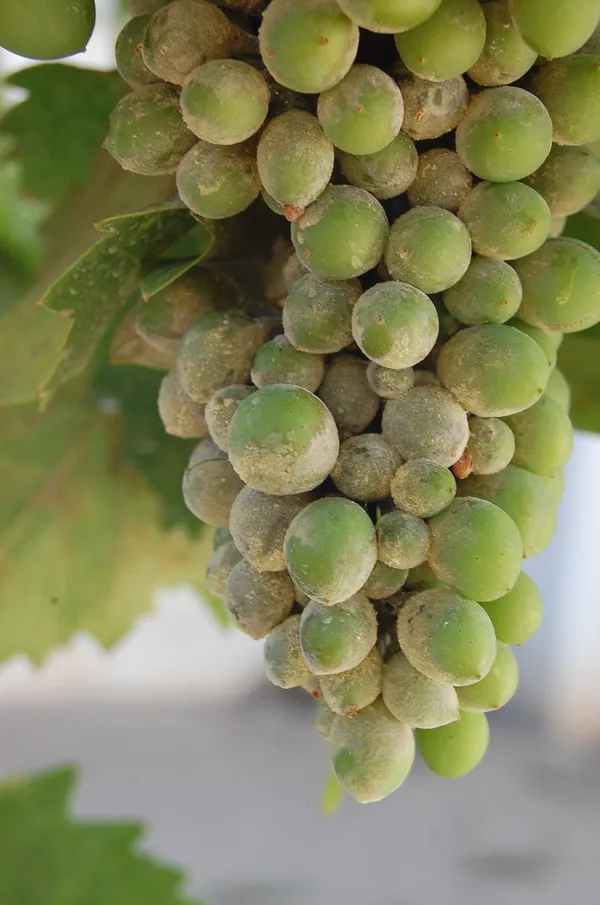
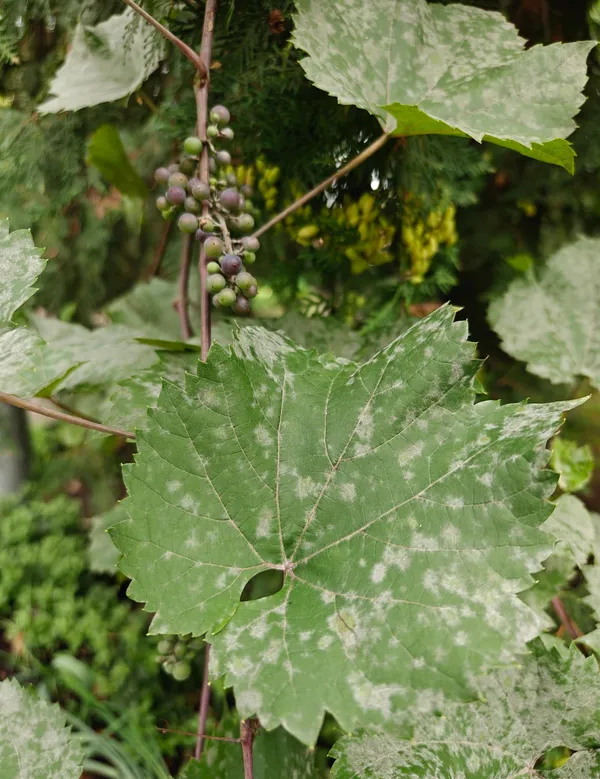
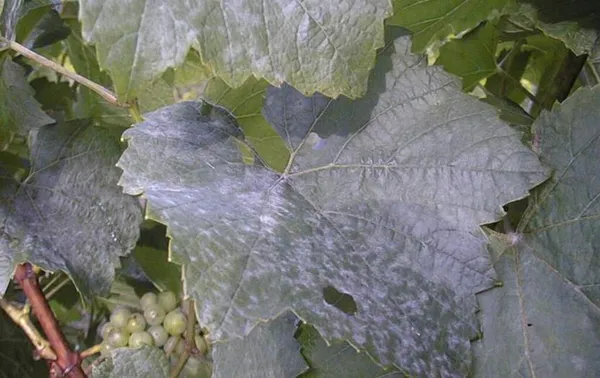
A dusty white-grey coating on leaves and berries — the most common grape fungus almost everywhere.
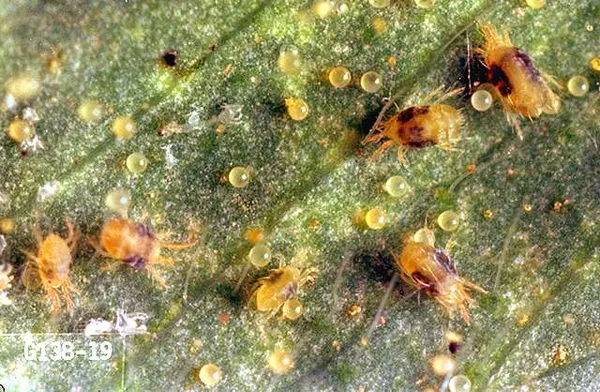
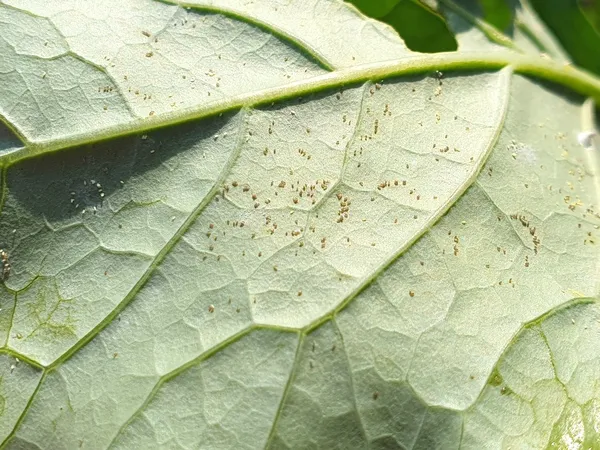
Tiny sap-sucking mites that stipple and bronze leaves in hot, dusty, dry conditions.
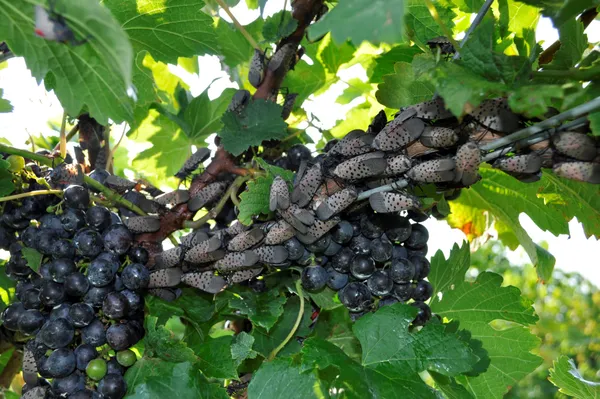
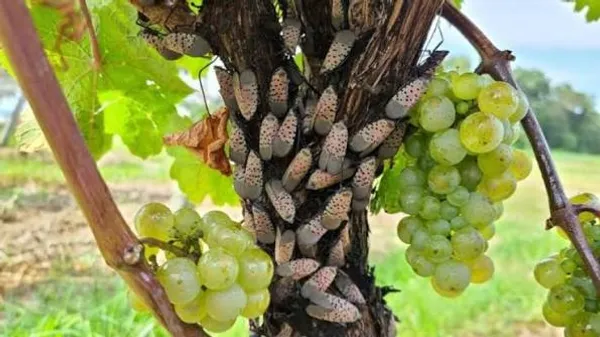
An invasive planthopper that swarms vines, sucking sap and coating them in sticky honeydew and sooty mould.
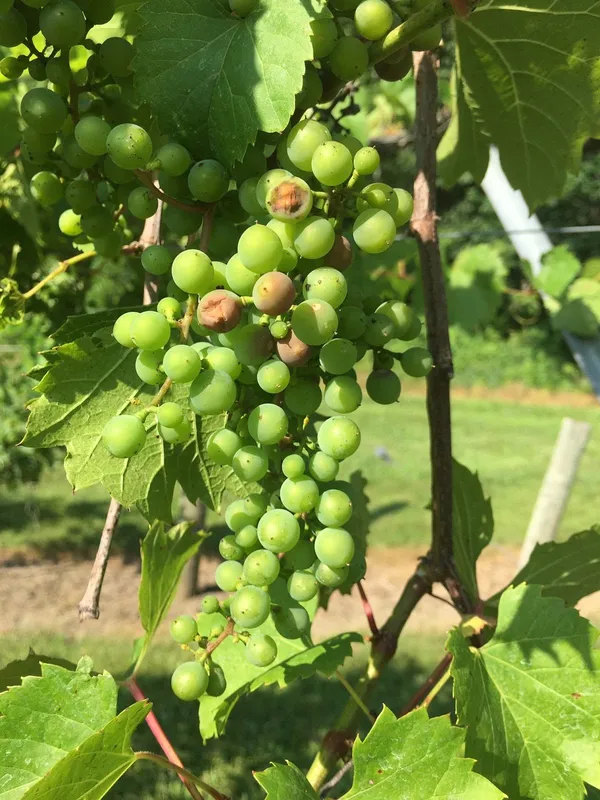
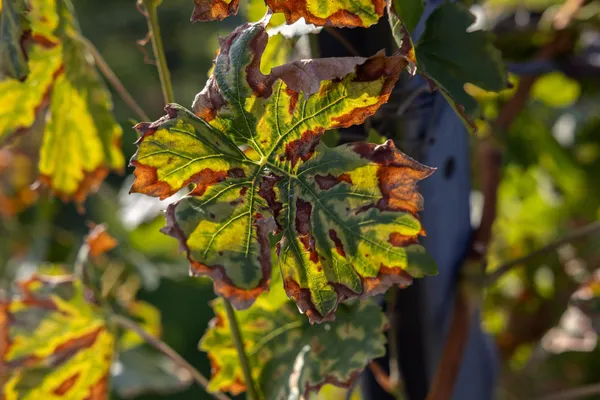
Heat and intense sun scorching exposed berries and leaves — often triggered by over-thinning the canopy.
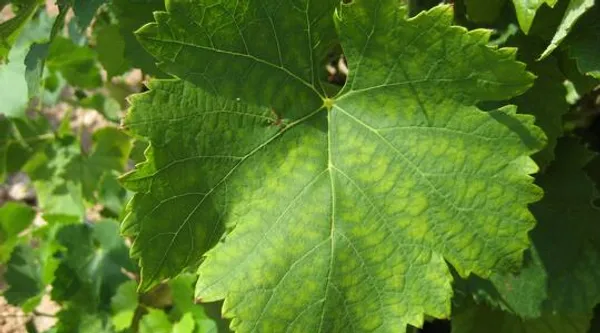
Small "little leaf" growth and straggly, shot-berry clusters — a look-alike for fanleaf virus.
No problems match — try a different search or filter.